Art et Mathématiques
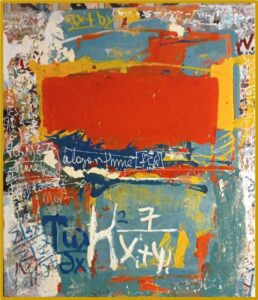
ALGORITHMES (produits d’actions intellectuelles)
Algorithmic Thinking = computation = (instruction + information) × speed × time. In natural language, when humans think, it means that they use the instructions inherent in their brains, universal to everyone, to process information from the outside world serially, selectively, and repetitively. Instructions can be equated with verbs in natural language that refer to mental actions, so this theory can be used relatively independently of computers in philosophy, humanities, and social sciences.
Moreover, we can expand the scope of instructions to any verb that refers to a mental action even if it cannot be simulated by a computer for the time being, since the mental action referred to by this verb can indeed be performed by the human brain; this is enough for us to treat it as an “instruction”—as long as we assume that the mental action referred to by it is carried out also in the form of “instruction + information,” or “verb + object,” relatively independently.
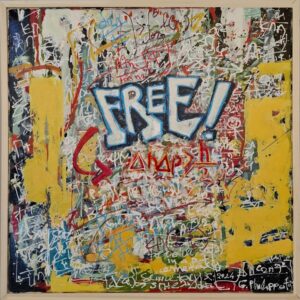 FREE UNCERTAINTY (et accepte que La vie est compliquée )
While the Heisenberg Uncertainty Principle does not mean “there are some things you can never be sure of”, it does imply “you can never be sure of everything.” How can this be? If you can never be sure of everything, doesn’t that mean there are some things you can never be sure of? Surprisingly, no.
The simplest example of the HUP is the following: You can never be certain of both the position and the speed of a microscopic particle. It is possible to arrange an experiment so you can predict the position of a particle. A different experiment would let you predict its speed. But you will never be able to arrange things so that you can be certain of both its position and its speed.
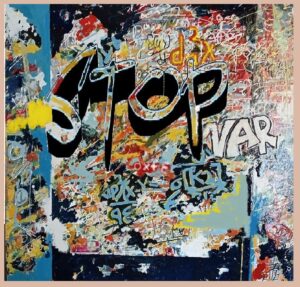 STOP V.A.R. for WAR (les guerres comme faits divers)
Before Internet we could use Lanchester’s laws that are mathematical formulas for calculating the relative strengths of military forces. The Lanchester equations are differential equations describing the time dependence of two armies’ strengths A and B as a function of time, with the function depending only on A and B.
Now we must incorporate the following : Σ [a(V), b(R), c(E), d(SoV)] with as variables : Volume, Reach, Engagement, Share of voice
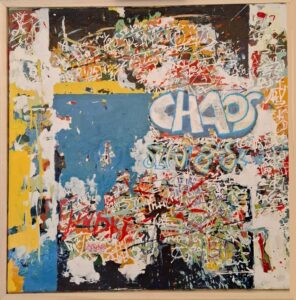 CHAOS (l’éternel commencement)
Small differences in initial conditions, such as those due to errors in measurements or due to rounding errors in numerical computation, can yield widely diverging outcomes for such dynamical systems, rendering long-term prediction of their behavior impossible in general.
This can happen even though these systems are deterministic, meaning that their future behavior follows a unique evolution and is fully determined by their initial conditions, with no random elements involved. In other words, the deterministic nature of these systems does not make them predictable
 UGLY DUCK CLASSIFICATION (ne catégorise pas les autres en fonction de qui tu es)
The ugly duckling theorem is an argument showing that classification is not really possible without some sort of bias. More particularly, it assumes finitely many properties combinable by logical connectives, and finitely many objects; it asserts that any two different objects share the same number of (extensional) properties.
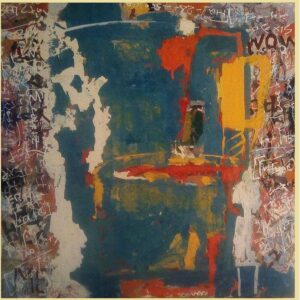 RUSSELL’s PARADOX (esprit de contradiction)
Russell’s paradox shows that every set theory that contains an unrestricted comprehension principle leads to contradictions. Let R be the set of all sets that are not members of themselves. If R is not a member of itself, then its definition entails that it is a member of itself; yet, if it is a member of itself, then it is not a member of itself, since it is the set of all sets that are not members of themselves. The resulting contradiction is Russell’s paradox. In symbols: Let R={x∣x∉x}, then R∈R⟺R∉R

Artificial Intelligence
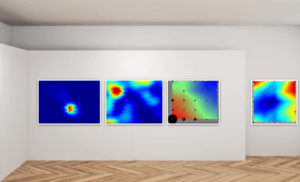
In recent years, Philippatos is using artificial neural networks (ANN) to capture human states, opinions and reactions to complex social, cultural and political issues.
He uses the self-organizing map (SOM) technique, a type of artificial neural network that is trained with unsupervised learning and produces two-dimensional representations.